top of page

Projects & Exhibitions List

My work is presented in No-Clip Dwelling, the finalists’ exhibition of the second KAF Young Art Prize, at Krupa Art Foundation in Wrocław, Poland.

Curated by Natalia Barczyńska and Monika Łuszpak-Skiba, the exhibition brings together works by 32 artists selected through an international open call. The prize encompasses painting, digital art, sculpture and installation, placing different artistic approaches in dialogue within a shared exhibition.

The exhibition is open to the public from November 7th 2026 to January 31st 2027, following the award ceremony on November 6th.

Venue: Krupa Art Foundation, Rynek 27/28, Wrocław, Poland.

Official exhibition page: https://krupaartfoundation.pl/en/kaf-young-art-prize-2026-no-clip-dwelling-wystawa-finalowa/

Artworks presented

Hewri, 2025
Acrylic on canvas
184 × 184 cm

Red Package, 2025
Acrylic on canvas
214 × 184 cm

Both paintings are part of my ongoing Beyond Gender Molds series, which examines how gender and identity are shaped by social, cultural, traditional and religious expectations.

Hewri takes its title from a traditional fabric mainly worn by women in the Kurdistan Region. The work uses it as a cultural symbol to question how femininity is defined and controlled. Other symbolic elements suggest restriction, including the sun as a reference to limited movement within daytime boundaries and signs of domestic confinement. Together, these elements create a space where cultural belonging, restriction, silence and resistance coexist.

Red Package extends this inquiry to society’s relationship with the environment. Painted cardboard in the background critiques fabricated environmental awareness and the assumption that alternative materials are automatically sustainable. Numerical and temporal references reflect how women are measured and confined by time, expectations and socially assigned periods of visibility and value. The red figure embodies vulnerability within these imposed structures while retaining an inner strength that resists erasure. A blue crack becomes a line of survival, suggesting endurance, hope, light and transformation.

Beyond Gender Molds: https://www.taraabdullah.com/beyondgendermolds

KAF Young Art Prize 2026 — No-Clip Dwelling

Hewri and Red Package from Beyond Gender Molds, presented in the KAF Young Art Prize 2026 finalists’ exhibition.

My painting The First Supper (2025) is presented at Høstutstillingen 2026, marking my debut at Norway’s annual National Art Exhibition. This 139th edition is organised by Norske Billedkunstnere at Kunstnernes Hus and brings together contemporary artworks selected by a jury of artists through an open submission process.

The First Supper draws on my experience of travelling abroad and encountering artworks in museums that I had previously known only through books. Bringing together personal memory, imagination, and religious symbolism, the painting reinterprets the biblical supper as a beginning: an encounter with art that opened possibilities for freedom and self-expression.

Growing up in an environment where my artistic expression was restricted, I found in art a space to question, imagine, and speak. In this painting, the idea of a first supper becomes a metaphor for that discovery and for a beginning that continues to unfold.

The First Supper, 2025

Acrylic on canvas

190 × 400 cm

Kunstnernes Hus

Wergelandsveien 17, Oslo, Norway

Photography by Bnwar Rzgar Abdulrahman, except the exhibition documentation photograph credited to Vegard Kleven / Norske Billedkunstnere.

The First Supper — Høstutstillingen 2026

The First Supper (2025), marking my debut at Norway’s annual National Art Exhibition.

Unknown is a group exhibition at UFO Art Gallery in Kraków, Poland, curated by Maria Ciborowska and presented from August 28th to October 10th 2026. Bringing together painting and three-dimensional works, the exhibition explores texture, material, structure, and the experience of looking.

My contribution features four works from my ongoing Beyond Gender Molds series: Moss Rose, Hollyhock Flower, Hollyhock Petal, and Rainbow. The series explores how society and family shape personal identity, drawing on childhood memories and lived experiences to question the expectations placed on women and girls.

Moss Rose, Hollyhock Flower, and Hollyhock Petal were created in 2024 using mixed media on canvas, each measuring 24 × 30 cm. Rainbow, created in 2025, is an oil pastel work on A3 Canson paper.

Alongside the exhibition, additional works from the series are displayed on rotation in the gallery’s showroom: Reduced to Ashes, Washing, Evening, PTSD, Butterfly Net, and Humid. These belong to the separate showroom selection, and their availability to view changes over time.

Beyond Gender Molds: https://www.taraabdullah.com/beyondgendermolds

Artworks by Tara Abdullah.

Photography by Szymon Sokołowski, courtesy of UFO Art Gallery.

Unknown

Four works from Beyond Gender Molds in a group exhibition curated by Maria Ciborowska.

Let’s Not Sleep is a large-scale anti-war installation composed of 13 beds and spent bullet casings, presented at Hvitsten Salong in Norway in August 2026. The work transforms the bed—a place associated with rest, intimacy, protection, and safety—into a space marked by violence, fear, and vulnerability.

The installation reflects on two forms of violence that can suddenly enter the space of sleep: the violence of war and the violence committed against women within patriarchal societies. In the Kurdistan Region of Iraq, documented cases indicate that, on average, a woman is murdered approximately every five days. These figures represent only the cases that are reported and documented, while many others may remain hidden or unrecorded.

Let’s Not Sleep particularly confronts so-called “honor” killings and the disturbing reality that violence against women can take place within the home, even in the bed—a space that should represent safety.

The beds themselves carry another layer of collective participation. One month before creating the installation, I published an open call inviting people to donate pieces of their beds—mattresses, pillows, blankets, sheets, and other objects connected to sleep and rest. The materials collected through the open call were brought together to create the 13 sleeping spaces that formed this first version of the installation.

By combining these personal, intimate objects with spent bullet casings, the work creates a tension between softness and violence, safety and threat, sleep and sudden awakening.

The work also reflects on people living through war and political violence, where sleep can be interrupted by gunfire, explosions, raids, and uncertainty. In this context, the bed is no longer separated from the violence outside; the instability of the political world enters the most private space of everyday life.

I am grateful to Hvitsten Salong for selecting me to present this work and for providing the space for this early version of Let’s Not Sleep to come to life. I also thank Safemuse for their support throughout the production process and for making it possible for me to develop the work during my residency in Norway. My sincere thanks also go to everyone who responded to the open call and donated pieces of their beds, becoming part of the work itself.

Documentation of the installation by Bnwar Abdulrahman.

Let's not Sleep

An installation of 13 beds and spent bullet casings confronting war and violence against women.

Braids is a site-specific installation composed of oversized black braids made from braided agricultural-grade black plastic sheets and metal wire. Stretching across spaces, the work evokes both a living body and a wasp nest, creating a forceful physical presence charged with layered symbolic meaning.

The work draws on Kurdish and Middle Eastern cultural understandings of hair as a site of identity, beauty, restriction, grief, and resistance. In many traditional contexts, women’s hair is heavily policed, controlled, or hidden, becoming tied to shame, discipline, and social power. In Braids, the braid is reclaimed as a public monument — unruly, visible, and defiant.

Made from discarded plastic material, the installation also engages environmental violence and pollution. The synthetic body of the braid reflects the spread of waste and the suffocation of both land and life through disposable materials. By transforming plastic into a monumental woven form, the work brings together ecological crisis and the politics of the feminine body.

For Kurdish women, the braid also carries histories of strength, mourning, and survival. It can signify pride, inherited memory, and resistance, but also pain and humiliation. In patriarchal societies, cutting or shaving a woman’s hair can become a violent gesture of punishment and erasure. Braids holds these tensions together, treating hair as both intimate matter and political symbol.

First exhibited at Lyse Netter Festival in Moss, Norway, the installation extended over 1088 meters of braided material, creating an overwhelming sculptural presence that speaks to visibility, memory, environmental destruction, and collective resistance.

Braids

Oversized black plastic braids exploring women’s identity, resistance and environmental destruction.

Participated in Oslo Open with my studio in Kabelgata, Oslo, Norway, as part of my residency with SafeMuse. The event opened the studio to the public and invited visitors into my working space to encounter my practice in process.

Presented an ongoing installation still under development, offering insight into the material, spatial, and conceptual direction of the work as it was taking shape. The installation reflected my continued interest in form, tension, repetition, and the emotional and political dimensions carried by materials.

Alongside the installation, I showed a selection of paintings produced during my residency with SafeMuse. These works extended key concerns within my practice, including identity, memory, gender, and the social pressures that shape individual and collective experience.

The studio presentation created an opportunity to share not only finished works, but also the process behind them—inviting conversation around making, experimentation, and the evolving relationship between installation, painting, and lived experience.

Oslo Open

An open studio presenting paintings and an installation in progress during my Safemuse residency.

Participated in Voices in Public Art: Mapping Freedom of Speech and Expression in the Nordic Region, a conference organized by Mesén as part of FORCE, a platform focused on artistic freedom of expression and democratic dialogue in the Nordic region. The conference brought together artists, curators, scholars, and cultural workers to reflect on the conditions of public art, democracy, and freedom of expression today.

Opened the conference with the performance I Want to Speak, presented at 09:30 in the University Aula. The performance introduced key questions around voice, visibility, and the struggle to speak under systems of pressure, censorship, and silencing.

Also presented The Sound Project as part of Session 1: Artistic Freedom of Expression. The work reflects on women’s voices, resistance, and the politics of expression through sound, drawing from Tara Abdullah’s broader practice of using voice as a form of testimony, protest, and collective memory.

Within the context of the conference, both works contributed to wider discussions on artistic freedom, harassment, censorship, self-censorship, and the role of art in public space. The presentation connected experiences from Kurdistan to broader Nordic and international conversations about what artists need in order to work freely and how art can challenge repression while creating space for dialogue.

Voices in Public Art

I Want to Speak and a video from The Sound Project at a conference on artistic freedom and public space.

Video presentation at BOKSEN, Hausmania, Oslo

Participated in FittyKATTA!, a performance evening at BOKSEN, Hausmania in Oslo, bringing together emerging and established artists working across performance, sound, voice, body, rhythm, and experimental expression. The event centered feminist ideas of liberation, bodily autonomy, freedom of expression, and the erotic as a vital space of resistance, play, and human connection.

The program created space for artistic approaches that move beyond institutional expectations and fixed cultural frameworks, asking what can emerge when artists work sensually, emotionally, and politically without needing to justify their language or methods through established structures of power.

Presented a video from The Sound Project, a work that reflects on women’s voices, resistance, and the politics of expression through sound. Originally developed through public sound interventions in the Kurdistan Region of Iraq, The Sound Project engages voice as both a personal and collective force—one that carries protest, memory, vulnerability, and defiance.

The video presentation highlighted how sound can act as a form of testimony and presence, especially in contexts where women’s voices are controlled, dismissed, or silenced. Through repetition, broadcast, and vocal intensity, the work examines the tension between speaking and being prevented from speaking, and considers sound as a space for release, endurance, and solidarity.

Within the context of FittyKATTA!, the work entered into dialogue with broader questions around liberation, sexuality, bodily agency, and expressive freedom, contributing a perspective rooted in feminist resistance and lived experience from Kurdistan.

Photos courtesy: Andreas Sætre (@andreassae).

FittyKATTA!

A video from The Sound Project presented in an evening of feminist performance and expression.

Participated in a group exhibition curated by Pooja Poudel as part of the Curatorial Intensive South Asia 2025, organized by Khoj Studios in collaboration with the Goethe-Institute / Max Mueller Bhavan. The exhibition brought together five artists whose practices engage with brokenness as both a lived condition and a method—across memory, identity, relationships, and social structures.

The works explored how experiences of rupture, loss, and fragmentation are carried, inherited, and negotiated within everyday life, questioning what is preserved, what is discarded, and how new meanings can emerge from what remains incomplete.

Presented Wailing, a sound-based work rooted in a traditional Kurdish vocal practice historically performed by women as a means of expressing grief and processing loss. Each wailing carries an individual story shaped by personal and collective experiences of violence, displacement, and injustice.

The work reflects on the gradual disappearance of this practice due to conflict, political fragmentation, and cultural and religious suppression, particularly restrictions placed on women’s voices. Through sound, the piece creates a space for listening, memory, and emotional release, while addressing themes of cultural erasure, resilience, and the possibility of rebuilding from what has been broken.

Images courtesy of Khoj International Artists’ Association.

Videos by Pooja Poudel.

What do we do with what is broken

Wailing in a group exhibition curated by Pooja Poudel, exploring loss, memory and cultural resilience.

Qazwan Rosary, 2025

Cotton-stuffed clothing, wild pistachio (Qazwan) seed rosaries wrapped around six life-sized doll-like sculptures.

Courtesy of the Artist

Produced with the support of ZR Art Gallery

Photos by Bnwar Rzgar Abdulrahamn

Qazwan Rosary was exhibited alongside three of my paintings from the Beyond Gender Molds series at the Ego Sum exhibition at the Palace of Fine Arts in Krakow (3 April – 3 May 2025). Curated by Wacław Kuczma and Ziyad Raoof, the exhibition featured works by Kurdish female artists exploring identity, gender, and resistance.

Qazwan Rosary presents six life-sized sculptures of women as nude, doll-like figures, crafted from leggings and clothing stuffed with cotton. Their nudity confronts the concept of Haram (forbidden) in traditional and religious communities, challenging societal taboos. By exposing the figures’ private parts, the installation emphasizes themes of shame, vulnerability, and the policing of women’s bodies in patriarchal societies.

Encasing the figures are tightly spiraling lines of rosaries made of Wild Pistachio (Pistacia atlantica) seeds—a material deeply rooted in Kurdish culture. These rosaries form intricate patterns that bind the women’s bodies, symbolizing cultural, societal, and religious restrictions that suppress individuality.

In Kurdish and broader Middle Eastern contexts, the rosary is a masculine object, particularly in traditional and religious settings, symbolizing control, discipline, and piety. By reclaiming the rosary in this work, the installation critiques gendered power dynamics and reimagines the rosary as a metaphor for the burden of expectations placed on women.

Paintings Exhibited Alongside the Installation

As part of the Ego Sum exhibition, three paintings from my Beyond Gender Molds series were also shown alongside Qazwan Rosary:

The Family

2019, 180 x 180 cm, Acrylic on Canvas

Explores gender as a cultural construct imposed on the individual through family structures. Figures are sized hierarchically—father larger, mother smaller, children smallest—reflecting unconscious societal assignments of role and value, while erasing individuality and fluid identity.

Plus

2019, 180 x 180 cm, Acrylic on Canvas

Delves into the crowded stages of identity formation from early childhood, where society’s molds—family, education, tradition—shape the individual into something distant from their imaginative, passionate self.

The Prayer Rug

2019, 180 x 180 cm, Mixed Media, Acrylic on Canvas

Childhood symbolism is used to dissect societal impositions such as religion, language, gender, and culture. The work shows how individuals are pressed into a system that speaks through them—but not for them—forcing a departure from their authentic inner world.

Qazwan Rosary

Six life-sized sculptures and three paintings in Ego Sum, exploring identity, gender and resistance.

Beyond Gender Mold painting series

Courtesy of the Artist

Photos by Bnwar Rzgar Abdulrahamn

Participated in the group exhibition The Light of Expanse (Światło Przestrzeni), held at the Palace of Fine Art in Krakow, Poland. The exhibition brought together artists from Kurdistan, exploring the dialogue between light, space, and cultural identity.

Presented eight paintings that reflect on memory, resilience, and transformation — recurring themes within the artist’s broader practice. The works engage with the tension between personal experience and collective history through layered textures and contrasting tones.

Special thanks to Mr. Ziyad Raoof, the Palace of Fine Art in Krakow, and curator Wacław Kuczma for their support and dedication in organizing this exhibition.

Paintings presented at the exhibition

The Red Painting II

2025

Mixed media on canvas, 188 × 186 cm

Hawri

2025

Acrylic on canvas, 184 × 184 cm

Mother

2024

Acrylic on canvas, 100 × 80 cm

Broken Package

2025

Acrylic on canvas, 188 × 188 cm

Kite

2025

Acrylic on canvas, 190 × 141 cm

The Red Package

2025

Acrylic on canvas, 184 × 140 cm

Coal Mine

2021

Mixed media on canvas, 100 × 45 cm

The Light of Expanse

Eight paintings from Beyond Gender Molds in a group exhibition of artists from Kurdistan.

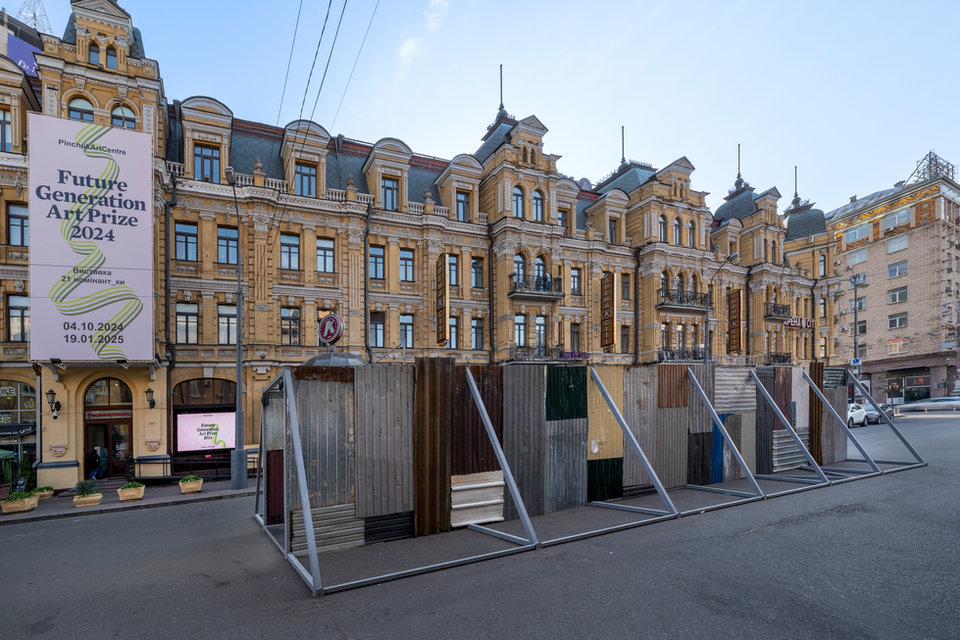
InBetween, 2024

boundary metal sheets, acrylic, spray paint, speakers with audio recording of Kurdish wailing

Courtesy of the Artist

Produced with the support of PinchukArtCentre

Photos by Ela Bialkowska, OKNO Studio for PinchukArtCentre/ Future Generation Art Prize 2024

InBetween, Exhibited in Kyiv, Ukraine from 4th of October 2024 to 19th January 2025

Exhibition of 21 Shortlisted Artists for the Future Generation Art Prize 2024

In-Between is an installation born from my personal experiences as a woman growing up in Kurdistan, a region marked by ongoing conflict and resilience. My work focuses on amplifying the voices of women who confront violence, endure societal suppression, and share their stories of resistance and emancipation. This installation is a culmination of these themes, reflecting the profound strength of women in the face of adversity.

Presented as part of the prestigious Future Generation Art Prize at the Pinchuk Art Centre in Kyiv, In-Between explores the roles of women in resistance and reconstruction, particularly in the aftermath of war. The installation features metal boundary sheets salvaged from war-torn regions of Ukraine. These sheets, scarred by conflict yet enduring, symbolize resilience and the collective will to rebuild.

Women are invited to leave their marks—messages, sketches, or personal contributions—on these sheets, emphasizing the shared effort and solidarity required for renewal and healing.

A defining element of In-Between is the sound of Kurdish wailing, a traditional and deeply emotional form of expression. This haunting melody, performed by Kurdish women during times of war and loss, serves as a therapeutic act of remembrance and resilience. Played through embedded speakers, the wailing underscores the bravery of women using their voices to heal.

Tragically, this cultural practice has been silenced in Kurdistan due to political occupation and oppressive ideologies, with its transmission halted for over two generations.

The work critiques entrenched societal norms that assign strength and industrial materials to men while relegating softness and domesticity to women. By using heavy, industrial elements typically associated with masculinity, In-Between challenges these gendered perceptions and highlights the overlooked strength of women. At its core, the installation fosters dialogue between Ukrainian and Kurdish women, connecting their shared experiences of resilience, survival, and reconstruction.

This work is a deeply personal yet universal exploration of the power of women to resist, rebuild, and heal in the face of unthinkable challenges. Being recognized as a special prize winner for the Future Generation Art Prize is a humbling honor, affirming the importance of this dialogue and the stories it seeks to tell.

InBetween

An installation of salvaged metal and Kurdish wailing, awarded a Special Prize at the Future Generation Art Prize 2024.

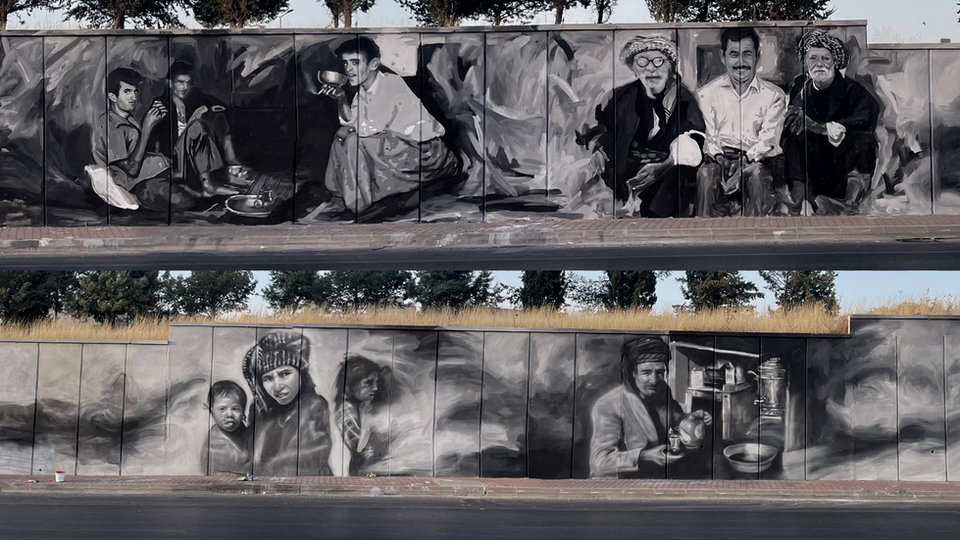
In the scorching heat of a Sulaimaniah summer, I embarked on a monumental artistic endeavor that now graces the Sulaimaniah-Raparin Road, welcoming visitors to our vibrant city. This awe-inspiring mural stretches across 150 meters and stands 4 to 6 meters tall, an unmistakable testament to the power of art. Over the course of 23 days, from July 15th to August 6th, I poured my heart and soul into this project, a homage to the bygone era of the 1950s captured in the lens of Photo Rafiq.

Amid temperatures exceeding 40 degrees Celsius and the hustle of the city's busiest road, I meticulously crafted 12 murals that breathe life into history. This colossal mural project marks the continuation of our Mural Festival, a collaborative effort in partnership with the esteemed Art Plus Organization. Each brushstroke speaks of dedication, and each image resonates with the soul of Sulaimaniah.

I invite you to journey through this visual tapestry of our past and present, a testament to the enduring spirit of art and creativity.

MURAL ART #2

Twelve murals inspired by Photo Rafiq’s 1950s photographs, celebrating memory and cultural heritage.

As the Assistant Project Manager and Mural Artist in a project by ArtPlus Organization (https://www.artplusculture.org), I had the privilege of collaborating with renowned muralist Guido Van Helen (https://guidovanhelten.com) on March 6, 2023, to create a captivating mural on Salim Street in Sulaimaniah, Iraq. This thought-provoking artwork centers around the theme of memory and features a Kurdish female child engrossed in exploring photo albums.

Working closely with Guido as his assistant, I had the opportunity to learn new techniques and it was a rewarding experience to be part of this meaningful art installation.

MURAL ART #1

A collaborative mural with Guido Van Helen, depicting a Kurdish child exploring photo albums.

The Voice/Sound Project is an extraordinary artistic endeavor that elicits a profound response within me. Its mesmerizing presence and thought-provoking nature leave an indelible impression. Positioned meticulously, the project utilizes strategically placed loudspeakers to communicate a message that resonates deeply.

In this culture and society, the use of loudspeakers is often forbidden for women, further silencing their voices and perpetuating gender inequalities. However, the Sound Project challenges these social norms by daring to amplify the voice of a woman. It bravely confronts the cultural barriers and restrictions placed upon women, seeking to dismantle the very systems that suppress their expressions and perspectives.
Through the captivating and hauntingly beautiful voice emanating from the speakers, the project serves as a powerful symbol of defiance and resistance. It exposes the injustice of denying women the opportunity to be heard, and serves as a call to action to break free from the constraints of patriarchal traditions.

As I stand in the presence of this impactful installation, I am filled with an overwhelming sense of empathy and admiration for the courage it embodies. The Sound Project not only creates an immersive experience for its audience, but it also shines a light on the urgent need to challenge and dismantle gender-based restrictions that hinder the full expression and participation of women in society. It stands as a testament to the power of art in challenging cultural norms and advocating for greater gender equality and empowerment.

The Voice was a work of art comprising a series of loudspeakers placed in four cities - Sulaimani, Halabja, Ranya, and Chamchamal - in a male-dominated country. The work consisted of a woman's voice delivering a message to her country, a message of peace and non-violent resistance. This voice represented the suppressed voices of women in the country, including those of children, young people, and the elderly, whose voices were often not heard even within their own homes. The message of the work addressed the difficulties and hardships faced by girls and women in Kurdish society due to the backwardness and devaluation of females within that society. It served as a wake-up call for society, a call for a conversation and reflection on the marginalised position of women. The work was presented at three different times on a single day in each of the four cities.

THE MESSAGE:

"That is me speaking. I want to say that I am every murdered girl, every immolated girl, every female you have trapped within your walls. Today I come screaming, screaming - can you hear my voice? Every day I want to speak, and no one listens. I am lost, lost in your money-making world, in the chaos of your families. Am I weak? Am I a source of sin? I am the girl buried alive. I am the nameless grave. I am the child bride. I am the fully grown, natural girl. I am the immolated girl. I am the murdered girl. I am the imprisoned daughter in your homes. You have made me a commodity that you remake every day by shrinking and expanding my body and face. I am not your sofa or furniture. Mother, I know your heart is full and you have been silenced. I was alone, unloved, disappointed. In the name of shame, you have wrapped us in hundreds of meters of cloth. You will move us from these four walls to those four walls. Yet I am still the greatest sinner and Satan's closest friend, and you are the believer and closest to God. I am the power you did not think of. You executioners will not be ashamed, you tyrants - who are you? I am the unheard female voice. I am the voice of the hearts of all females." - Tara Abdullah's complaint letter.

The project faced a significant backlash from certain members of society, particularly male-dominated and Islamic communities. These groups claimed that the project's message, delivered through loudspeakers in four cities, was hateful towards Islam and supportive of the LGBTQ+ community. However, the project actually focused on violence against women and women's rights, and had no intention of criticising Islam. Despite the peaceful nature of the message, the project faced strong opposition and the speakers were eventually turned off or destroyed and taken down by those who opposed it. This incident highlights the complexity and sensitivity of art projects that tackle controversial topics, and the potential for misunderstandings or mischaracterisations to fuel backlash and resistance.

Voice Proect

Public sound interventions confronting restrictions on women’s voices and the politics of being heard.

The installation "Feminine" in Sulaimani, Iraq consisted of a 4,800-meter-long line covered with the clothes of 99,678 Kurdish women survivors of sexual and gender-based violence.

This project was made possible with the help of the Civil Development Organization and was intended to expose the abuse that happens behind closed doors and normalize women's bodies.

The installation was composed of traditional Kurdish clothes, head scarves, skirts, trousers, tops, dresses, bras, and underwear, collected by Tara and her team after knocking on doors and talking to tens of thousands of women in Sulaimani, Halabja, and Chamchamal.

The clothes were sewn together and hung onto the street pole line in a way that preserved their shape and displayed the items usually hidden underneath.

"The Feminine Project" exhibition is a thought-provoking and impactful display of art that delves into the harsh realities faced by women in the Kurdistan Region of Iraq, particularly those who have experienced violence. As a young artist from Sulaimaniyah, I use various artistic mediums such as paintings, installations, performances, sculptures, videos, and designs to express my innermost feelings and questions about the world.

The exhibition explores the painful experiences and suppressed identities many women in the region face.

It challenges certain values and practices of a conservative society and serves as a contemporary work of art that seeks to inspire change and raise awareness about violence against women.

"The Feminine Project" received mixed reactions from the public, with some criticizing it for its portrayal of the city and its values.

Nevertheless, it also garnered support as an important artistic endeavor that ignites conversation about pressing social issues.

Despite facing backlash and challenges, I remain dedicated to my mission of using art as a tool for social justice.

My exhibition uncovers the silent pain of women and brings these concerns into the public sphere, encouraging dialogue and action towards a more equitable society.

Feminine Project

An installation of women’s clothing addressing gender-based violence and the visibility of women’s bodies.

My work explores the dynamic relationship between society and the individual, examining how societal influences shape personal identity. Each piece encapsulates the questions and reflections that permeate my mind. These artworks, varying in size, are created by me, although several other artists, such as the Cy Twombly, movements like CoBrA, and Children’s World in general.

My expressions and the deconstruction of forms in my work signify a process of dismantling everything around me. This approach resonates deeply with experiences of pain or loss, which for me begin where the pain or emptiness starts. My artworks reach back to the innocence of childhood, a period marked by emptiness and suffering, depicted through simplistic, child-like forms.

A recurring motif in my work is the washed-out canvases or discarded pieces of paper, symbolizing my childhood and the significant influence of my family. These elements represent the ongoing process of shaping and expressing oneself, particularly the shaping of an individual to be a girl. The predominance of sun forms in the paintings contrasts with the rare appearance of night scenes, highlighting the struggle that females face, as they are often not allowed to go out at night.

Numerical elements are also present in my works, with the number four frequently appearing. This symbolizes the carving of time for me, evoking the limit on being out of the house and the necessity of returning home by four o’clock because I am a girl. This period of time during the day is associated with collecting knowledge, learning, expressing oneself, and various other life experiences depicted in the paintings.

Dark questions about society and its laws are interwoven into my expressions, reflecting the complex interplay between individual and collective experiences. The use of grey and heavy colors around the figures underscores the weight of these themes.

Beyond Gender Molds

An ongoing painting series exploring how society, family and childhood experiences shape personal identity.

bottom of page